
Overcome Price Checking: Monetize Your Phone Calls
- March 20, 2017
- by Mindy Naumer
- Business Tips

Mindy Naumer
ServeNow Marketing Consultant
I recently heard Steve Glenn of PSACO speak on the issue of how to convert phone calls into jobs (selling on value, not on price), and found it to be much-needed information for this business.
Let’s say the prospect opens with, “How much to serve some papers in Denver?” This is a common question we are all too familiar with. Why, when we answer with our price, do they hang up and not give us the job? Possibly because we have not sold ourselves and our business!
While I speak with hundreds of process servers a month across the country, one main question or complaint is, “The calls I get are just price shopping. I can’t compete with that,” and, “How do I stand out from my competitors?” There are steps you can take to turn price shoppers into repeat clients by offering a higher value of service rather than lowering your prices.
Slideshow: Price Isn't The Issue
Below are some great points that I got from Steve’s presentation, as well as others that I find integral to winning new business.
Answer Your Phone
First and foremost, answer your phone! This may seem to be a no brainer, however, you would not believe how many businesses (process serving and private investigation) I call on a daily basis that do not answer their phone calls. Not only do they not answer their phone calls, their voicemail is either unprofessional or non-existent. Trust me, if I was looking to hire someone, I would move on quickly to the next server on the list.
How Missed Phone Calls Hurt Your Business
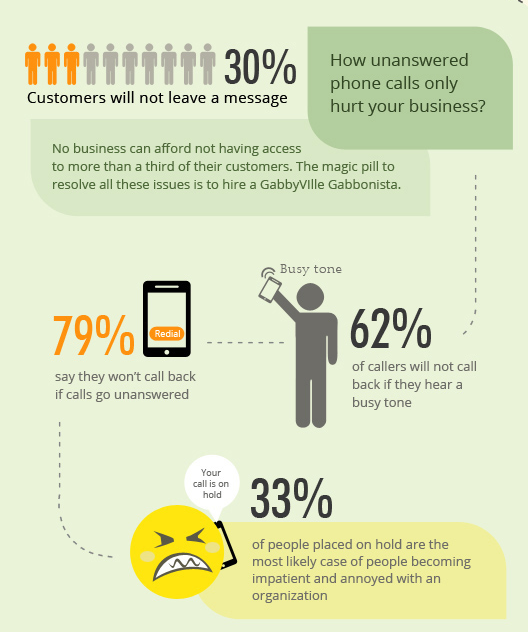
Image courtesy of GabbyVille.
There is no better way to kill a lead then when a prospect calls your business and you don’t answer. So answer your phone, set up call forwarding, and create a professional voicemail system. If you miss a call, return it as quickly as possible and focus on impressing them with your company's standards and values.
Converting a Phone Call to a Client
Now that that is taken care of, what do you do once you have a prospect on the phone? Let’s say the prospect opens with “How much to serve some papers in Denver?” This is a common question we are all too familiar with. Why, when we answer with our price, do they hang up and not give us the job? Possibly because we have not sold ourselves and our business. Per Steve, “It’s not about lowest cost or highest cost . . . it’s about value.”
How to Sell Your Value
5 Steps for Selling a Phone Call
- Determine the service locale
- Determine the type and quantity of serves
- Determine the court date
- Offer the fee to cover completion
- Close the Deal!
Price is never an issue unless there is an absence of value.
- PSACO President Steve Glenn
Here’s how to set your value: Your response to the prospect’s cost call should be to ask them questions regarding their request. By asking the same questions each time, you form a practiced routine for each new prospect. This will portray professionalism, confidence, and knowledge. What the prospect wants to know is can they trust you to get the job done. Once you portray this, you have created a value that justifies the fee.
“In this economic time, you can not afford to let anyone off the phone without a sale.”
- PSACO President Steve Glenn
I couldn’t have said it better.
In order to determine correct price estimates and show the value of your services, start with the below questions and tailor them for your company:
- What is the timeframe for the service?
- When is the court date?
- Are there numerous papers or people to be served?
- Do you have an address for the individual to be served or will location/skip trace services be needed?
Once you gather the information and give a price estimate, tell the customer what is included in the price such as multiple attempts or court filing. You should also tell the prospective client what to expect, the anticipated turnaround time, and how to get status updates. Offering transparent services and having a prepared overview of your company helps the client understand the value of your services. Make a sale based on your company and the standards it provides versus the price of your services.